
It’s 2025 and the last parts of the Digital Markets Act have rolled off the legislative conveyor belt and are making their way into the open market.
As an agency we have been tracking the progress of this new legislation and what it means for our industry. Some might see it as a step back, some might see it as an opportunity to refine client’s advertising and take control of Google’s runaway revenue system.
One thing is for sure – Google will not lose out. The house always wins.
What is the Digital Markets Act?
The premise of the DMA states that “An advertiser must be able to make an independent verification of the effectiveness of their advertising campaign”
What that means to clients and agencies is that – we will be able to see where all the money is being spent and exactly how effective the spend is.
What could the possible impact of the Digital Markets Act be?
This can only be an opinion at this stage, but we know that this legislation will impact Google’s revenue. Advertisers will choose to remove certain ad types and advertiser spend will decrease on these formats.
As Google is currently running trials to assess the damage, once the picture becomes clear we will then see the ways in which they aim to recoup revenue.
More ad placements are coming
Google is trialling numerous ad formats and SERPs layouts which could indicate intent to add more ad formats in the search results.
More ad formats will impact organic visibility in an already over crowded space
It’s likely that a lot of businesses will see a decrease in their organic footfall in the coming years.
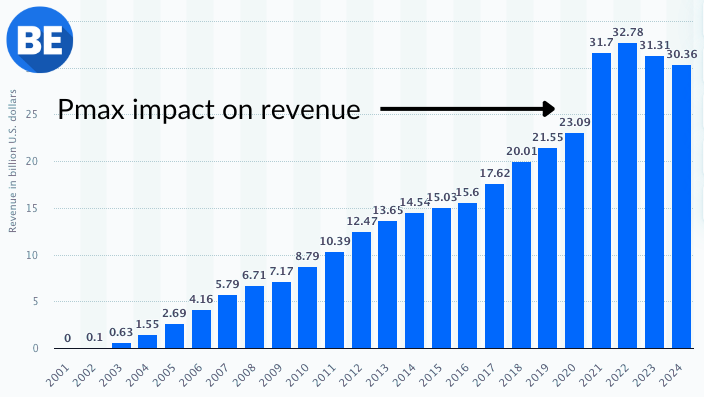
Pmax campaigns were launched in November 2021. Advertisers who had never previously ran display or YouTube ads began spending revenue on these formats within Pmax campaigns in both Search and Shopping. Google advertising revenue rose from 23bn to 31bn within a year.
What’s next for Google advertisers?
There is no generic answer to this question which covers all bases, but ecommerce and retailers should certainly expect Google to be looking to monetise more online real estate in the coming months and years. I wouldn’t be surprised if they wanted to take revenue from every sale you make. We could speculate that their margin bidding model is indicative of a way to rank ad-space based on margins, eating into more organic territory.
Agencies and younger marketers may have to adjust to finding ways to reach their target audience using the GDN based on a well thought out and researched approach like we used to back in the day – perish the thought!
The only take away is that our stance is – The House Always Wins and advertisers should keep in mind that their organic growth is likely to stall and Google will look for more ways to take money from every sale you make.
If you currently don’t know how Google is spending your money on Pmax, reach out to us for a full audit and you many be in for a nasty surprise!
