
Do Yourself A Favour, Increase Your AOVs
Be Found Be Chosen exists to increase your online sales.
One of my very, very favourite things about working here is the simplicity of it. Everything we do, literally everything, maps to this equation:
Traffic x Conversion Rate x Average Order Value = Sales
An increase in sales must mean an increase in one of the magic three: Traffic, Conversion Rate, or Average Order Value.
For me, Average Order Value (AOV) doesn’t get the recognition it deserves. It’s pretty easy to understand how increasing traffic, or improving your conversion rate will boost your sales, but poor little AOV rarely gets a look in. And sadly, it’s often the easiest one to improve. This post is intended to get you understanding AOV a little bit more, and appreciating the impact that it can have on your business.
When trying to explain anything within eCommerce, it always helps to compare the online experience with a high street, bricks & mortar, retail store. I’ll build out the analogy, before I crack on with Average Order Value and why you should be looking to improve it. I’ll end with some practical tips on how to increase yours. Here we go:
Your customers are walking down the high street, they see the shop window.
For you, the store owner, your shop window is like your advert. Whether you display a supremely dressed mannequin, or go for a Mike-Ashley-esque “EVERYTHING MUST GO”, your shop window needs to give someone a reason to enter your store. Just like online, your best Facebook and Google Ads are the ones that give customers a reason to visit your website. Maybe you’re running a sale. Maybe you’re the exclusive stockist of a certain product line, who knows. Just give them a reason, and make it a good one.
When they arrive on your website, your landing page must do two things, confirm that they’re in the right place, and signposting to where they want to go. Imagine the last time you walked into somewhere like TopShop. You’re usually greeted with a massive picture of a beautiful model wearing this season’s fashion. “Yep, I’ve arrived” your inner-customer thinks. From there, it’s easy enough to see the shoes are in one section of the store, bags in another, coats in another and so on. Your online store should be just as easy to navigate. Well laid out, well merchandised collection pages are a must.
Web traffic is simply how many people enter your online store. Just like how not everyone on the high street will enter your shop, not everyone on the internet will visit your website!
Similarly, from all the people who enter your store, only a percentage of them actually take something to the till and buy something. Most of your visitors are probably just browsing. In eCommerce, we say the ones that do buy, have converted.
This is Conversion Rate.
Often – especially on newer stores – we’re happy with conversion rates of 2%. You don’t need to be a rocket scientist to know that means for every one hundred people that enter the store, only two are processing a transaction.
Both traffic, and conversion rate, are easy to understand. You need more people to enter the store, and then you need more of those people to buy something. Easy, right?
Increasing both of those things leads to a better sales figure at the end of the month.
It starts to get a bit more woolly when we consider the value of those discrete, individual transactions. You’ll stock hundreds, if not thousands of products, and different customers buy different products and different quantities of products.
There is loads of information to digest within the concept of the Average Order Value. This is why we use AVERAGE order value, and not absolute order value. The use of “average” should make it easier to understand. Anyway, enough chit chat, let’s get into AOV:
How to work out Average Order Value?
Average order value, over a given time period, is:
The revenue generated from sales divided by the total number of transactions in that period.
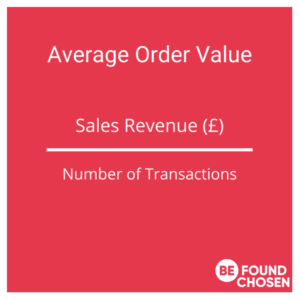
Which means, when you think about it, there are only two ways to increase your average order value:
- Have people buy your more expensive items.
- Increase the number of items people buy per transaction.
Let’s go back to TopShop, and say we get 4 transactions in that day. Admittedly, that’s probably a pretty slow day in TopShop, but hey ho:
From our four transactions, one buy’s a pair of socks for £3. Another treats herself to a nice handbag, £50. The third needs a whole new outfit, that’s a big, stressful job, isn’t it? £110. The last piles the shopping basket high, taking what feels like half the store to the till, £490. This final customer, the one who has updated their wardrobe twice over, has significantly increased the average order value for that day. With that transaction, AOV for the day is £163.25. Without, £54.33…
Average Order Value can tell you, at a glance, which are your most popular products, and how much your customer tend to spend. Also, knowing whether your AOV is going up of down tells you if your marketing is working, but it becomes much more interesting when you dig a little deeper.
Average Order Value vs. ROAS
ROAS is one of the key metrics of any eCommerce effort; A good ROAS means a healthy online store.
The great news for you is that a higher AOV, directly increases your ROAS figure. Allow me to explain:
ROAS stands for “Return on Ad Spend”.
And more ad spend, simply means more traffic to your store.
That’s literally how it works by the way, I can spend any amount of money on ads, let’s say £1000 – and I’ll get a certain number of people into my online store. If the cost per click is say, 20p, I’ll get 5 clicks for £1. Therefore, 5000 clicks – or 5000 visits to my store – for my £1000 budget. I can literally rock up to Google and Facebook, stump up the cash, and they will send visitors my way.
BUT, and it’s a big but, just because I’ve sent people into your store, doesn’t necessary mean they will buy. Hence, the “return” bit of ROAS, is as much about Conversion Rate and Average Order Value. Think back to our eCommerce equation – traffic x conversion rate x average order value = sales.
How much money are you getting back in sales, in return for your ad spend?
The higher your CR and AOV, the more valuable your traffic will be. And more valuable traffic, means a better ROAS.
We’ll save improving conversion rate (making more of your web visitors buy something) for another time. Right now, we’re focusing AOV here. The question is:
How can you get the folks who are going to buy anyway, to spend that little bit more? They need to put more items in their basket. You’ll have seen things like “Free Shipping for orders over £X“? That’s a common AOV booster.

So, now we know that increasing AOV leads to a better ROAS. Let me develop this a little more with a truly caveman example. Be warned, these numbers will never work in reality, but I think they stress the point quite well…
Let’s say we’re marketing sets of guitar strings and we sell them for £10 each. We generate 100 sales, for revenue of £1000. I told you this was groundbreaking….
Campaign 1
Ad Spend: £100
Revenue: £1000
Average Order Value: £10.
ROAS: 10
Next time we run this campaign, we have another page on our website which advertises guitar lessons with a master tutor. Someone adds the “How to riff like Hendrix” course for £1000 to your store. To your surprise and total delight, someone buys it! That means your figures for campaign 2 look like this:
Campaign 2
Ad Spend: £100
Revenue: £2000
Average Order Value: £20
ROAS: 20.
Including the more expensive product as an option has resulted in higher revenue. Must have been an in-shred-able deal…. Get it?
Sorry, I’ll see myself out….
If you hate dreadful jokes, I’m sorry. Genuinely, stick around though, I’m about to get to the good bit…
Yes, the guitar string scenario was an overly simplistic example, but here’s the point:
The ad spend was still £100.
There were still only 10 transactions.
Average Order Value doubled.
ROAS doubled.
Sales doubled.
I’ll break it to you now so you don’t get carried away, you won’t double your sales on a big eCommerce store by doubling your AOV, that’s just not going to happen.
What you do need to know though is that higher average order value means more money in your pocket directly.
In the guitar string example, the ad spend remain the same. We saved the money that we would’ve, or maybe should’ve spent, on finding a new customer to buy the course. Therefore, you retain more of your profit margin. Higher AOV means more profit.
AOV and Profit Margin
Stick with me here, I’m going to unpack a real world example, I need to snap out of this daydream where I’m an incredible guitar player.
Higher AOV equals higher profits, when all your other costs remain the same.
Many online stores have hundreds, if not thousands, of products listed. The more products there are, the more important AOV tends to be. Let’s say you do have hundreds of products, and your AOV floats around the £50 marks. You get that increasing your AOV is a good idea, but are struggling to make sense of why. Well;
Here’s your sale of £50.
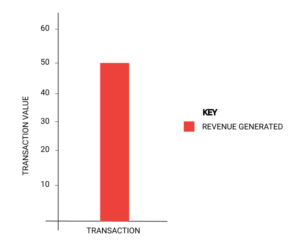
Of that sale, let’s say £15 goes into COGS, Cost of Good Sold. That’s what you had to spend to get the product in stock.
You also gotta spend some money on marketing and advertising (imagine if we didn’t?!). Let’s allocate another £15 from our marketing budget to the Customer Acquisition Cost, or CAC, for this sales.
In total, we have a £30 Cost of Sale, leaving a fairly healthy profit of £20 (or 40%). Your sale now looks like this:
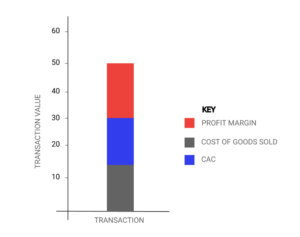
Remember when we sold the guitar strings, we added nothing to our ad spend, at all. Cost of goods sold didn’t increase at all, it’s just the time required to put the course together.
When we recruit the SAME customer we get the SAME transaction, independent of how much money he spends. If we can get this customer to spend more. Look at how the profit increases from £20 to £30:
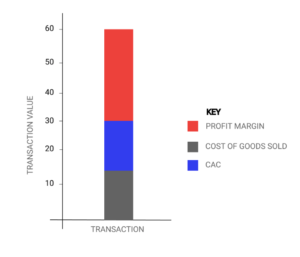
It’s important to remember, this is happening over the hundreds of transactions your online store might process within a month. It’s unlikely that every customer will increase what they spend. This is the whole concept of average order value.
Cost of Good Sold, and CAC are going to remain steady. You will still acquire the transaction, whether there’s one, or two, or ten items in that transaction is totally irrelevant. The profit margin on your additional products sold in the order, goes straight into your back pocket. You’re effectively saving on additional CAC / Marketing spend.
Ker-Ching.
Let’s get it right now. Higher AOV means better profit. Here, when AOV was £50, profit was 40%. When we increase the AOV to £60, profit rose to 50%.
Let me say it one more time. Higher AOV means better profits…. Has that sunk in? Good.
Now the question becomes, what should you do with this extra cash? You could just take the money and run, and that’s fair, I’m not judging, but if you’re reading this, you’re probably interested in growing your online store, so you’re looking to reinvest.
Where to reinvest?
You’ve suddenly got more money in the bank. You’ve got options…
Because you’ve increased your AOV, you can now afford to spend more on marketing, while still maintaining the profitably.
Below, we keep our new AOV at £60, but we’ve increased the Customer Acquisition Cost from £15 to £25. The profitability still looks pretty good to me…
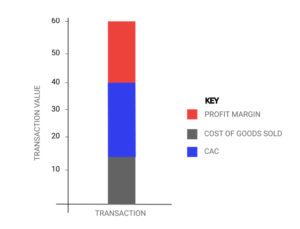
The key here is that we have additional marketing spend available, this is where all the fun begins…
You might want to test out a new audience on Facebook.
That would depend on getting a whole new set of creative assets right (ie. relevant, scroll-beating pictures and videos that were contextual to your audience), they can take time and money to produce though.
When they achieve higher AOV, many store owners pour more money back into Google.
That’s because it’s quick and easy to do. But crucially, the keywords that were too expensive before in terms of cost per click, suddenly become affordable.
Google Ads are auction based, meaning they are self governed.
If a keyword is very competitive, it’s either profitable, or at the very least it’s effective in recruiting new customers. Remember, businesses don’t last very long by bidding on keywords where they make a loss…
By increasing your Average Order Value, you can comfortably increase your marketing spend.
You’ve given your business a fighting chance in the more competitive, more expensive keyword auctions. Sometimes these auctions are dominated by the industry giants, with marketing budgets in the millions. It’s a tough game to play.
Ecommerce is a game of recruiting customers profitably.
That’s where it’s won or lost. It’s where businesses succeed or fail. Increasing AOV gives you a much better fighting chance of being on the right side of profitable.
Average Order Value is often referred to as a glass ceiling.
If you’re sending good traffic to your website, and your conversion rate is decent, you’ll simply never be able to grow at a profit if your AOV is too low. The AOV glass ceiling can be tough to see and even tougher to break, I hope I’ve made it clearer for you.
Remember, there are two ways to increase Average Order Value:
- Get people to buy a more expensive product (one where you have more profit margin),
- or get people to buy more products per order.
Let’s get practical now, I’ll end this blog post with:
How to increase AOV
You fully on board with AOV now? Cool.
Allow me to finish off this blog post with 5 ways for you to increase yours.
Cross-selling
The addition of a different or complementary product to get you to spend more.
The high street have been doing this one for years. When was the last time you had a Tesco Meal Deal. Or how about the age old question of “Would you like fries with that?”.
Both of those are cross-sells. Start thinking about how you can a product bundle. How could you do that for your store? Tools like One Click Upsell make this incredibly easy.
Up-selling
Persuading a customer to upgrade their purchases, or to buy a more expensive version of the product.
This one happens a lot in tech. Has the iPhone really improve THAT much since the 6s? Probably not, but people still buy newer versions, just so they have the newer versions. Other up-sells can include complementary products like screen protectors, phone case or maybe an extended warranty.
Airlines do this well (or not well, depends how you view it..) but they offer you travel insurance, car hire, accommodation, transfers and all sorts when you buy a flight ticket…. All of those are up-sells.
The pages in-between basket and checkout can be a great place to increase AOV. Less people than you might think will abandon a purchase once they’ve hit checkout. Musclefood get me every time. When you hit checkout, they offer a “box of protein goodies” worth £25 – BUT ONLY £7.50 IF YOU ADD IT TO YOUR ORDER NOW.
Every. Single. Time. How can you say no?
Discounts
No brainer really isn’t it? “Get £10 off when you spend £50 or more”. Here’s a nice one from Son of a Tailor:
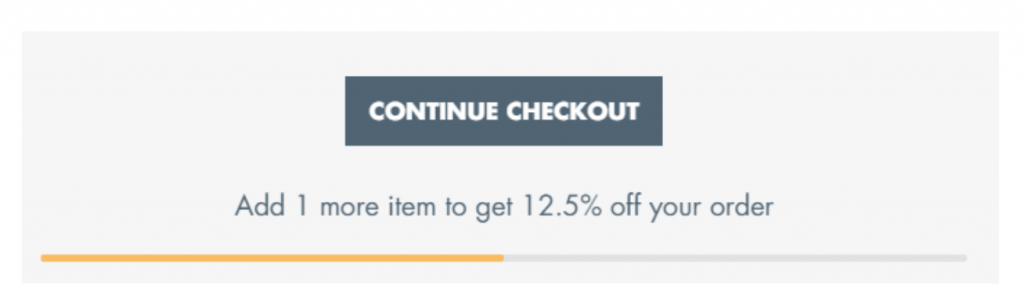
Volume discounts can be great for your customers. The money you saved on Customer Acquisition Cost can be passed onto a customer if they buy more than one item.
Now, that might, just might, make him incredibly happy…. and he’ll go and tell all his friends……
As much as I’ve just written this whole blog post about measuring your AOV, the magic of marketing is in the things you can’t measure.
Free Shipping and Returns
Many stores still use free shipping to incentive higher order values, and that’s fine.
Personally, I’m of the belief you should bake the shipping cost into your product cost and be done with it. Paying for shipping at all leave a sour taste in the mouth, avoid where possible!
Subscriptions
This entire blog post, and I’ve not mentioned the subscription model once. Apps like Recharge make this a doddle.
Subscriptions are fantastic. You only pay to recruit the customer ONCE. And they keep paying you in regular intervals. The oddballs subscription is one of my favourites. Boxers and socks every month for £9.99! Yes please!
When thinking about subscriptions, you make your money, not on the first purchase, but on your second, third, fourth, fifth and….
Your profit on purchase one might be tiny, some companies are even willing to make a loss just to recruit a customer. Sale 1 might look like this:
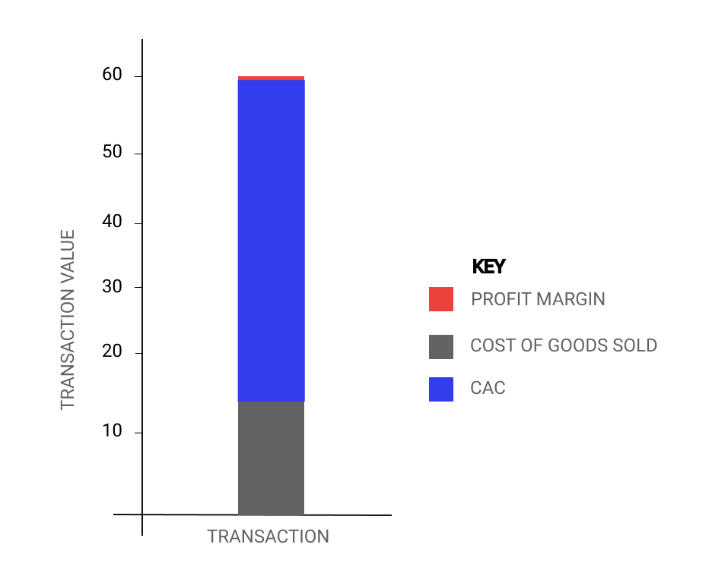
But Sales 2, 3, 4, 5, 6 and so on, might look like this:
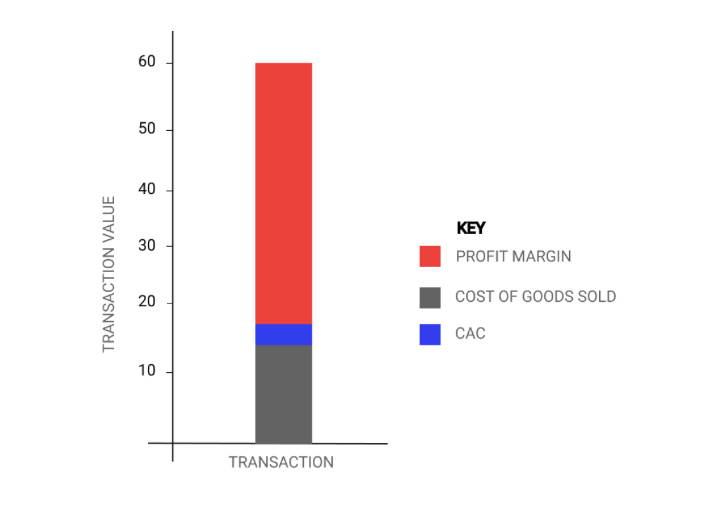
As I say, you make your money on the future purchases, and it can be good money too! But strictly speaking, subscriptions don’t increase your Average Order Value, they increase your Lifetime Customer Value…. LTV is a whole other topic, and I’ll address it next time I grace this wonderful company blog.
If you’ve read this, and you’re feeling inspired to take your eCommerce store to the next level:
You can book a phone call with me directly, alternatively, you can use the contact form, we’re only a small business, I’ll probably see that anyway….
