
Both good, but better together. Here’s why.
When it comes to digital marketing, it’s easy to assume “search” is just one colossal factor. SEO and PPC impact search results users see – that’s why we bleat on quite as heavily as we do about paid and organic marketing efforts. They’re two v. v. different beasts.
Search engine optimization (SEO) is all or nothing. A good effort will get you seen; a great strategy elevates your business to a whole new level of profitability. Pay Per Click (PPC) will make sure you’re present in all the places you should be, and gives your competitors something to lose sleep over.
The only thing we love more than a graph is a funnel:

What’s going to determine when my Ads show?
In a word, ‘intent.’ If you tap ‘beer gardens near me’ into the search bar – and you know you have done – you’re gonna see the Google map pack because Big G knows you likely want to visit that warm garden of tipsy joy in person. Searches dripping in intent are where Google ads really make money – so you should keep in mind the content of your product pages so they can rank for more relevant search queries.
For retailers, the biggest opportunities to drive revenue through Google Ads is for searches where the Google Shopping feature is present. With around 97% of Google’s revenue coming from Ads, we’re not expecting this figure to get smaller anytime soon.
The big fat pro of Google Ads is that they pop traffic over to a site almost immediately. So if you’ve just hustle cultured your arse off to launch a new product and need to start generating interest, it’s straightforward enough to set up a campaign, know which keywords you want to appear for and start flashing your homepage to the people waiting to see it. Or get us to do it for you. Your shout.
Doing the same with SEO simply takes more time. No two ways about it, babe. Google loves nothing more than updating its algorithm (and the next shuffle for Core Web Vitals is no different), and when it identifies shitty, low-quality referral links leading to your site it’s like going to give you quite the talking to. Penalties knack your ranking and it can take years to crawl back. ‘Outrank’ by Damon Burton covers every valid reason for Google kicking off.
With PPC, you can set up a campaign and pay to be put in front of your target market. Once you find a receptive audience via paid, there’s a stronger argument for spending your time strengthening your website organically.
Speaking of which…
If adjusting campaign budgets is starting to feel like a full time job, try test-cutting it in places you’ve already got a strong organic audience. Say it with me: ‘blindly upping my bids and hoping for some of that sweet ROI is not a marketing strategy.’ It can choke your progress and leaves you pretty rigid to explore other avenues and that’s silly.
For example, let’s look at the last search I did for skincare:
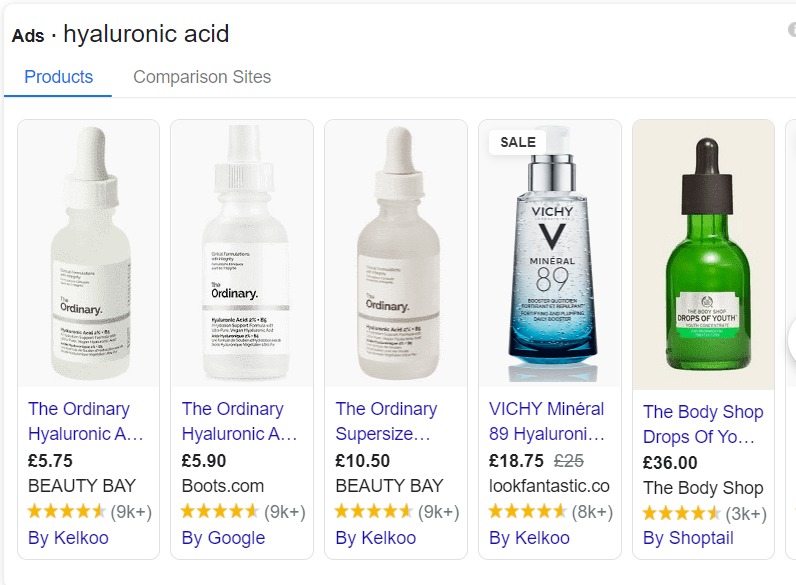

The Ordinary simply did not come to play on the SERP. They’re pulling numbers on the shopping carousel but they’ve made an impressive dint on the organic results just underneath, too.
You can be reasonably confident that if they turned off all shopping ads, someone would have silky smooth skin whilst collecting their P45 – but the risk is far less than if they didn’t appear for the term ‘hyaluronic acid’ organically. There’s room to say that overall profitability could wiggle its way upwards because they’d be giving less of their margin to Google, so if you want to spread some budget to other places that could be a decent place to start.
You can’t fight a Quality Score.
They will fight back and they will fight dirty. The lower your quality score for a given keyword, the less relevant Google thinks your ad is for that particular term and the more it’ll cost you. Proper shit, I know. There’s a boatload of ways you can tickle your score into playing nicely, but usually if a campaign isn’t doing the trick, the keywords get culled to leave more budget for the more profitable campaigns.
Leaving them to rot in the PPC graveyard would be daft. Analyse said keywords and use them to create content that sits closer to the intent of your searcher. A lot of times out of… wey, a lot of times, the reason keywords fail is ‘coz the landing page is a bit ‘meh.’ It’s not that I just want to know what you’ve got, I want to know why I want it from your website. Know what I mean?
Export the list of all the deleted / paused keywords you thought you’d killed off and after a bit of an awkward apology, look for opportunities to enhance your content. Your organic and paid thought processes will be besties again. Yayyyy.
SEO & PPC loves remarketing nearly as much as we do.
You know PPC knows how good it is at putting your product in front of customers at the early stages, when they’ve first established they have an ailment only your product can remedy. However, it becomes a canny costly exercise to rely on PPC to cover all of the other points in the decision-making process.
When a browser is still mulling it over and sniffing out the alternatives, the sexy looking Google Ad mightn’t keep the same appeal that drew them over in the first place. Finding your organic content comparing your product to your competitors, though? Phwoar. Ballsy. Love you. You free later?
The benefits of providing this content are two-fold. Firstly, you’ll start to drive free organic traffic from people searching for comparisons (looooosersss) to your site, and secondly, you can use this content in remarketing ads which is much more engaging for someone who hasn’t made their mind up yet.
Even if you didn’t think this blog was awful, it can still be an absolute head blag to get your SEO / PPC balance right. We’ve got a team who love the sound of their own voices and know a thing or two about both factors – fancy a chat?
